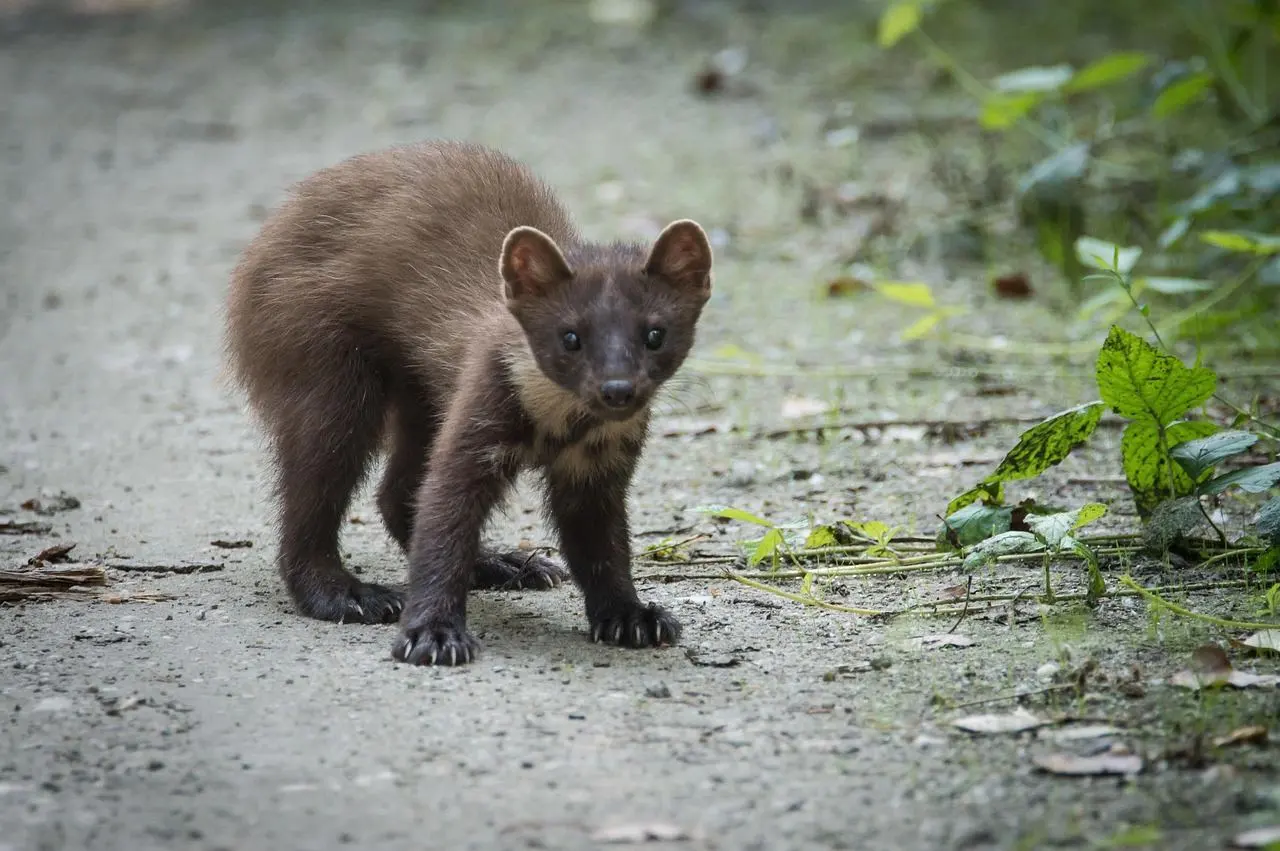
Curious what a sable animal actually is? It is a small, silky-furred marten, Martes zibellina, that lives in the forests of Siberia and nearby northern Asia. Here is everything you need, from size to status.
| Item | Value |
|---|---|
| Scientific name | Martes zibellina (Linnaeus, 1758) |
| Male weight | 880-1800 grams |
| Male body length | 380-560 mm |
| Gestation | 250-300 days |
| Wild lifespan (probable maximum) | 8 years |
| IUCN Red List category (2009 handbook) | Least Concern |
These figures come from the Animal Diversity Web account and the 2009 Handbook of the Mammals of the World treatment. Figures and assessments can change, so check the sources before you rely on them.
What is a sable animal?
The sable (Martes zibellina) is a species of marten, a small omnivorous mammal that lives mainly in the forests of Russia, from the Ural Mountains through Siberia, and in northern Mongolia, according to Wikipedia. Its range also touches eastern Kazakhstan, China, North Korea and Hokkaido in Japan.
It belongs to the weasel family, Mustelidae, in the order Carnivora, as the Animal Diversity Web classifies it. Linnaeus described the species in 1758, with a type locality in Russia, as recorded in the 2009 Handbook of the Mammals of the World.
The number of subspecies is unsettled. The Handbook says thirty have been proposed but that a taxonomic revision is needed. Wikipedia adds that Mammal Species of the World recognises seventeen, while other scholarly sources report anywhere from seven to thirty.
Some readers reach this page from the design or art-supply side of the name, and two separate guides cover that: one on the sable brush and one on the sable color. A side-by-side look at the animal and its close relatives is in the guide to sable vs marten.
Size, weight and appearance
The sable is a compact animal. The Animal Diversity Web reports that males have a body length of 380-560 mm and a tail of 90-120 mm, and that males are heavier than females.
| Measure | Males | Females |
|---|---|---|
| Body length | 380-560 mm | 350-510 mm |
| Tail length | 90-120 mm | 72-115 mm |
| Weight | 880-1800 grams | 700-1560 grams |
Measurements are from the Animal Diversity Web account. Other references differ a little, so check the source before you quote them.
The Handbook gives a slightly different lower bound for males, 800-1800 g, and says adult males are slightly larger than females. For a closer look at the spread, see the guide to sable size and weight.
Several features make the sable easy to recognise:
- Build: a long body, short legs and a short bushy tail around a third of the head and body length (Handbook).
- Coat: long and silky pelage that ranges from pale grayish-brown to dark brown, almost black (Handbook).
- Season: the winter pelage is longer and more luxurious than the summer coat (Animal Diversity Web).
- Throat: a light patch that may be gray, white or pale yellow (Animal Diversity Web).
- Skull: long and narrow (Handbook).
Where sables live: range and habitat
The sable once ranged more widely. The Animal Diversity Web says it was once found from Scandinavia to northern China, while its present distribution does not extend as far west but still covers Siberia into northern China.
The Handbook lists China, Japan (Hokkaido), Mongolia, North Korea and Russia as range countries. Wikipedia adds that its Russian distribution is largely the result of mass re-introductions involving 19,000 animals between 1940 and 1965.
The classic habitat is the taiga. The Animal Diversity Web describes dense forests, flatlands and mountain regions, with spruce and cedar in eastern Siberia and larch and pine in the west.
Inside those forests, the Handbook says sables typically prefer mature stands of large trees with a dense canopy. They avoid open areas, and they are found near streams and in mountain country. Details on forest types and denning sites are covered in the guide to sable habitat.
For shelter, the Handbook describes den and rest sites in several places:
- holes among or under rocks;
- hollow logs;
- spaces under tree roots;
- burrows that can be several meters long, ending in a nest chamber lined with dry vegetation and fur.
According to Wikipedia, burrows near riverbanks and in the thickest parts of the woods are common, often dug among tree roots for security.
Diet and behavior
Sables are primarily carnivorous. The Animal Diversity Web lists mice, chipmunks, squirrels, bird eggs, small birds and even fish, and calls the species a major predator of small rodents in northern Asia and Siberia.
The Handbook shows a broader menu:
- mostly small mammals such as rodents, pikas and hares;
- birds, reptiles, amphibians, fish and insects;
- fruits, honey, nuts and berries.
In north-eastern China, remains of mammals turned up in 89% of scats, per the Handbook. When main foods run short, the Animal Diversity Web says sables eat berries, cedar nuts and vegetation, and in harsh weather they cache prey in the den. The full menu is covered in the guide to what do sables eat.
Socially, sables are solitary outside the breeding season, according to the Handbook. In the Daxinganling Mountains of China, male and female home ranges overlapped by an average of 62%, yet there was virtually no overlap between males.
They are mostly terrestrial but good tree climbers. Wikipedia says they hunt mainly by sound and scent, and that they have been recorded travelling 6 to 12 km per day when food is scarce.
Sources disagree about the daily rhythm. The Animal Diversity Web calls the species diurnal, the Handbook says it is active by day and night, and Wikipedia calls it primarily crepuscular, becoming more active in the day during the mating season. Local conditions and season probably explain part of the difference.
Defense relies on sharp claws and teeth, according to the Animal Diversity Web. Its known predators include eagle owls, eagles and other predatory birds.
Breeding, young and lifespan
Mating runs from June to August, per the Handbook. The Animal Diversity Web adds that males make shallow grooves in the snow about one meter long, accompanied by frequent urination.
Sables show delayed implantation. After mating, the embryo does not implant for about eight months, and development itself takes only 25-30 days, according to the Animal Diversity Web. Births occur the following spring, in April or May, per the Handbook, which explains why the whole pregnancy lasts 250-300 days. The calendar is laid out in the guide to sable breeding season.
Litters of 2-3 individuals are more common, according to the Animal Diversity Web, though the Handbook says litter size is one to five, usually three or four. Newborns arrive helpless, with unopened eyes and thin hair, and weigh 25-35 grams.
The young then develop on a fairly quick schedule:
- Eyes open between 30 and 36 days, per the Animal Diversity Web.
- Pups emerge from the den at 38 days, according to the Handbook.
- Weaning comes after seven weeks, when the mother gives regurgitated food (Animal Diversity Web).
- Sexual maturity arrives in the second year of life (Animal Diversity Web).
Fathers sometimes help. Males have been seen protecting the female’s territory and even bringing food to nursing mothers and their litters, as the Animal Diversity Web reports.
Lifespans differ sharply between settings. On fur farms individuals have lived up to 18 years, while wild sables probably top out at 8 years, and roughly two-thirds of a wild population is under two years of age, according to the Animal Diversity Web. The sable lifespan guide looks at why.

Conservation status and the fur trade
As of the 2009 Handbook of the Mammals of the World, the sable was classified as Least Concern by the IUCN Red List and considered common throughout most of its distribution. The same treatment called it rare in China, where it was once common.
Local assessments can look different. Mongolia’s national assessment, published in 2006, rated the sable Vulnerable because hunting for its valued fur had caused a decline. It expected a population reduction of at least 30% over three generations, according to the National Red List entry. More detail is in the guide to sable conservation status.
The fur explains most of the pressure. The Handbook calls it one of the most valuable furs produced in Europe and Asia, and says over 25,000 sables are harvested annually on fur farms.
Wikipedia says sable fur has been highly valued since the early Middle Ages, that the Russian variety yields the most valuable fur, and that the best pelts come from the Transbaikal boreal forest region. Timelines and trade routes appear in the guide to sable fur trade history.
The Animal Diversity Web, citing a 1990 reference, reports that numbers had been severely reduced by extensive hunting early in the century. It adds that hunting is allowed only by licensed persons and that fur farms were set up to let wild populations grow back.
Frequently asked questions
Is the sable animal endangered?
Show answer
Not on the global scale, according to the 2009 Handbook treatment, which describes the species as common over most of its range. The picture is less comfortable in places: Mongolia’s 2006 national assessment blamed fur hunting for a population drop.
Do sables hibernate?
Show answer
The sources used for this guide describe no hibernation. The Animal Diversity Web instead says sables stay hidden in their dens for days during snow storms or when people are hunting them.
Where does the word “sable” come from?
Show answer
According to Wikipedia, the name appears to be Slavic in origin. It spread into most Western European languages through the early medieval fur trade.
Is a sable a kind of marten?
Show answer
Yes, it is a marten species in the genus Martes. Wikipedia notes that it looks much like the pine marten but has a more elongated head, longer ears and a proportionately shorter tail.