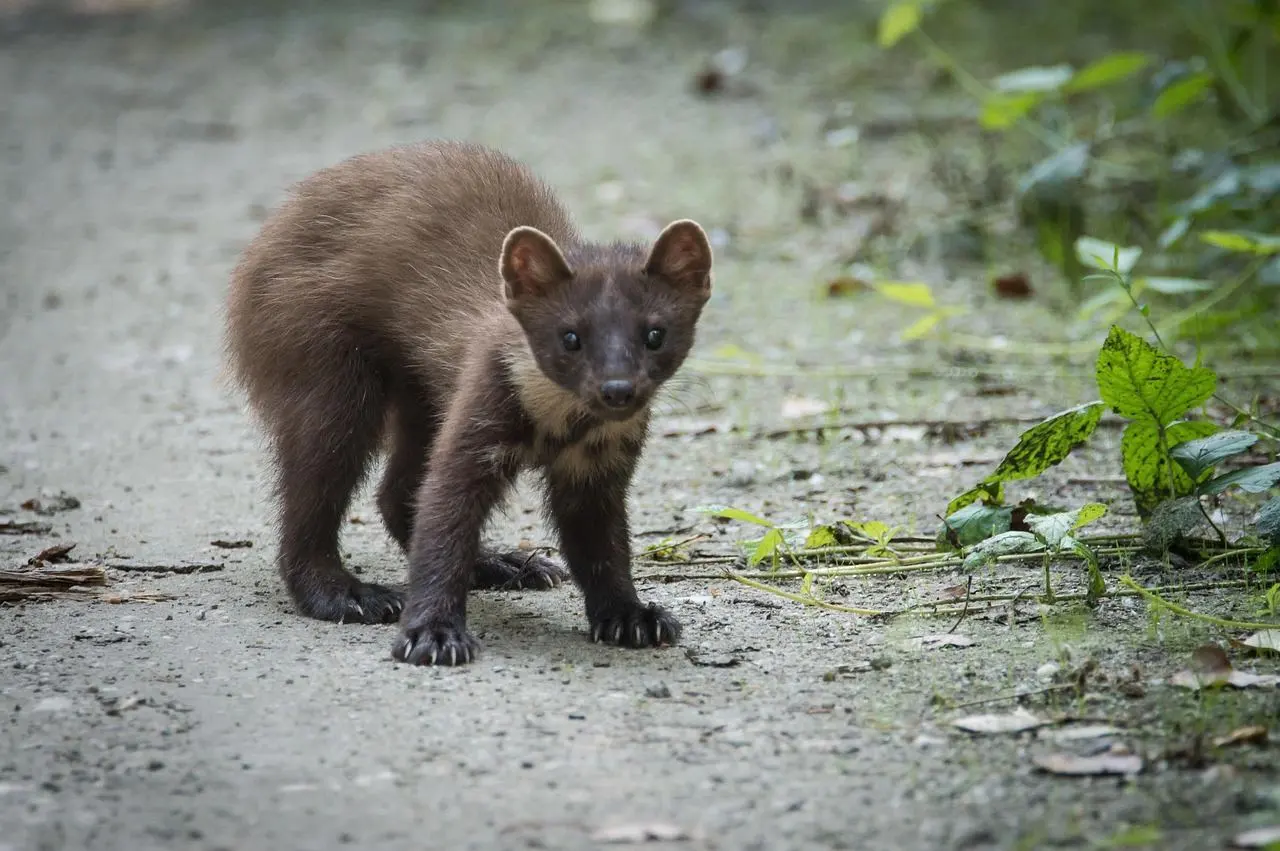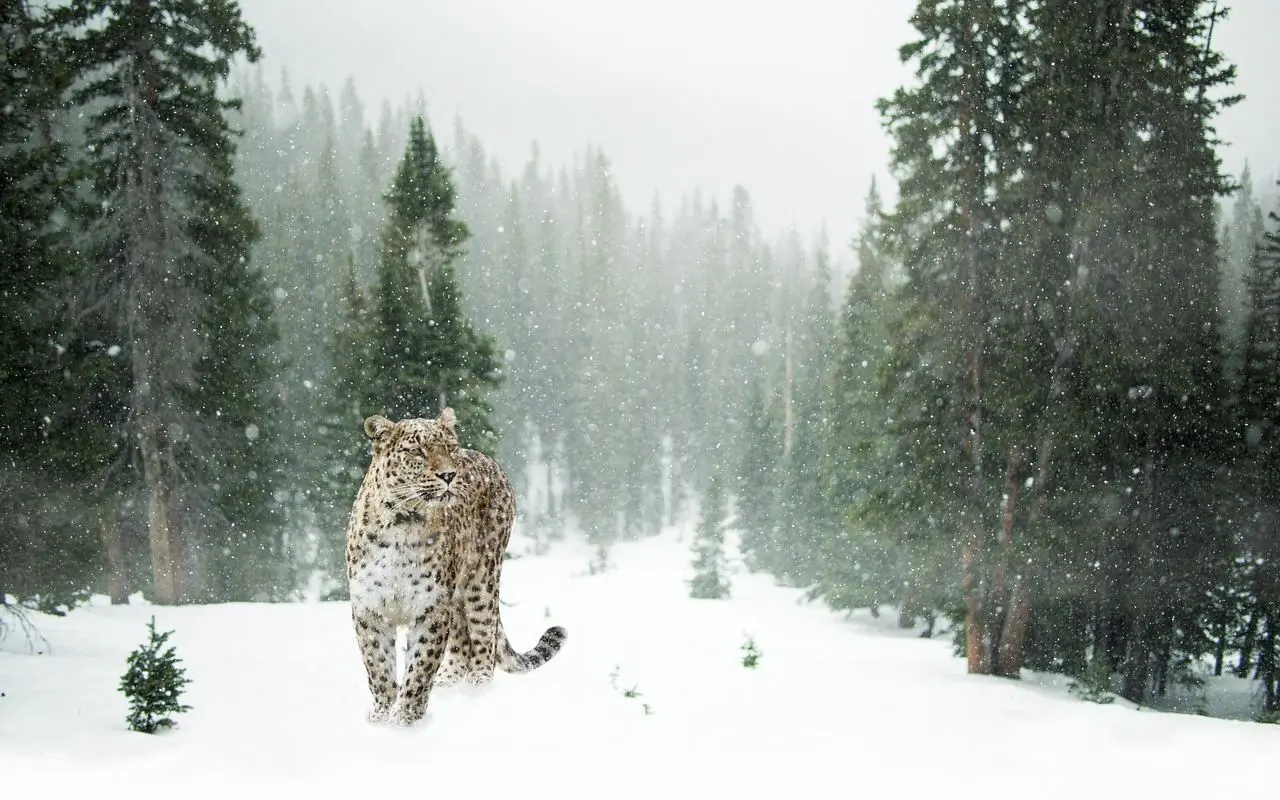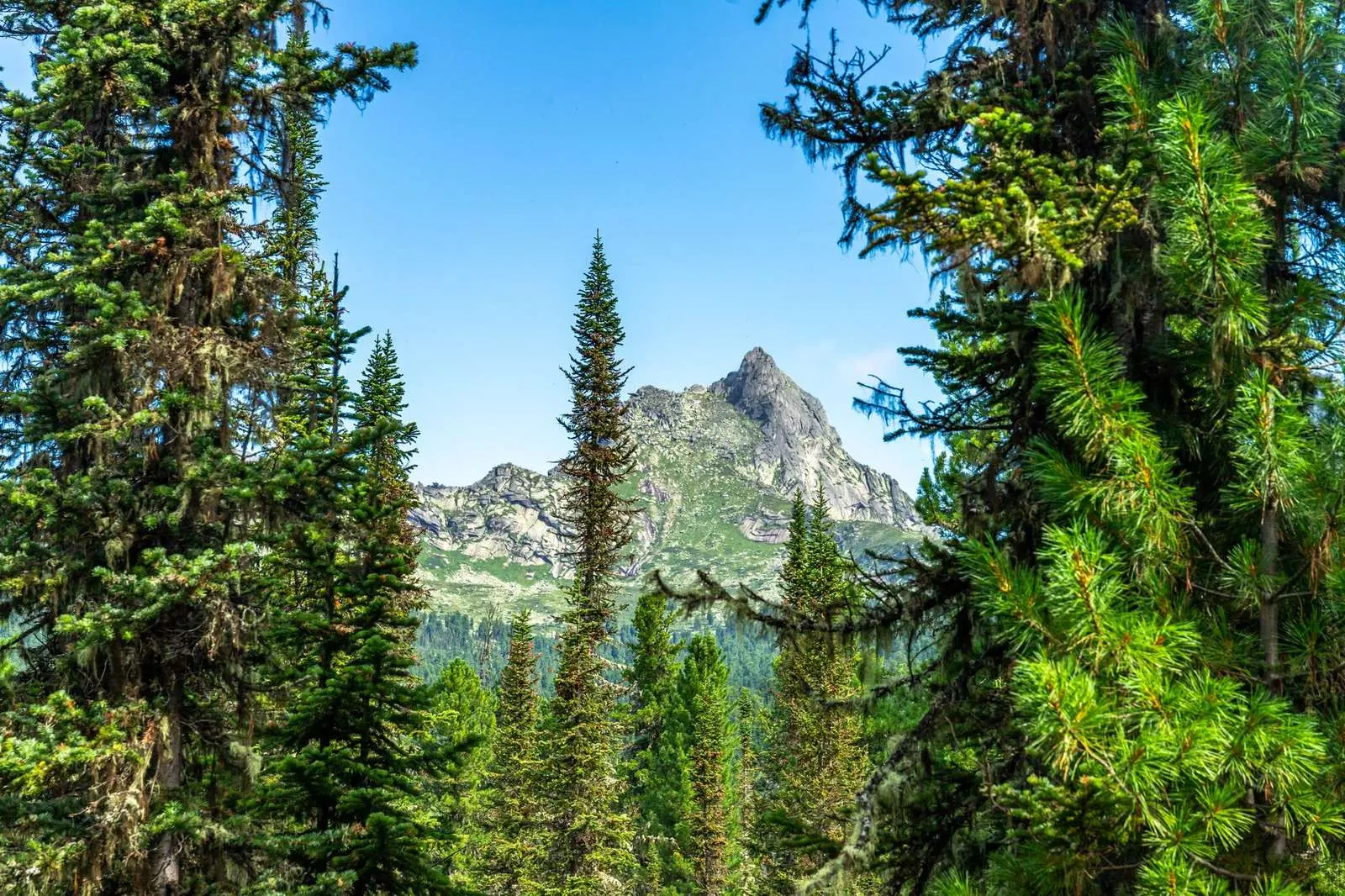
Wondering where sables actually live? Sable habitat is dense taiga forest across northern Asia, from the Ural Mountains through Siberia to northern Mongolia, with pockets in China, North Korea and Hokkaido, Japan.
This page is one part of the guide to the sable animal, focused on where the species lives.
| Item | Value |
|---|---|
| Core habitat | Boreal forest (taiga) of spruce, pine and Siberian cedar |
| Home territory size | 4 to 30 square kilometers |
| Winter travel when food is scarce | Up to 12 kilometers per day |
| Russian re-introductions | 19,000 animals between 1940 and 1965 |
The figures come from Wikipedia’s sable entry and One Earth’s species profile. They can change, so check the sources before you rely on them.
Where do sables live?
The sable (Martes zibellina) is a marten of the northern Old World. Wikipedia describes it as living mainly in the forests of Russia, from the Ural Mountains throughout Siberia, and in northern Mongolia. Its habitat also borders eastern Kazakhstan, China, North Korea and Hokkaido, Japan.
Region by region, the distribution section on Wikipedia breaks it down like this:
- Russia: the Ural Mountains and Siberia, plus Sakhalin.
- Mongolia: the Altai Mountains and the forests around Lake Hovsgol.
- China: a limited area of the Xinjiang Uygur Autonomous Region, the Greater Khingan Range in the northeast, and the Lesser Khingan Range in eastern Heilongjiang.
- Japan and Korea: Hokkaido and the Korean peninsula.
Sables look a lot like pine martens, and in the Urals the two species share ground. If you want to tell them apart, the guide on sable vs marten covers the differences, and Wikipedia notes the sable has a more elongated head, longer ears and a proportionately shorter tail.
Forest types sables prefer
Across its range the sable is a forest animal. Wikipedia says it inhabits dense forests dominated by spruce, pine, larch, Siberian cedar and birch, in both lowland and mountainous terrain.
The Animal Diversity Web adds a west-to-east split: spruce and cedar forests in eastern Siberia, larch and pine forests in western Siberia. It seems to avoid only extremely barren high mountain tops.
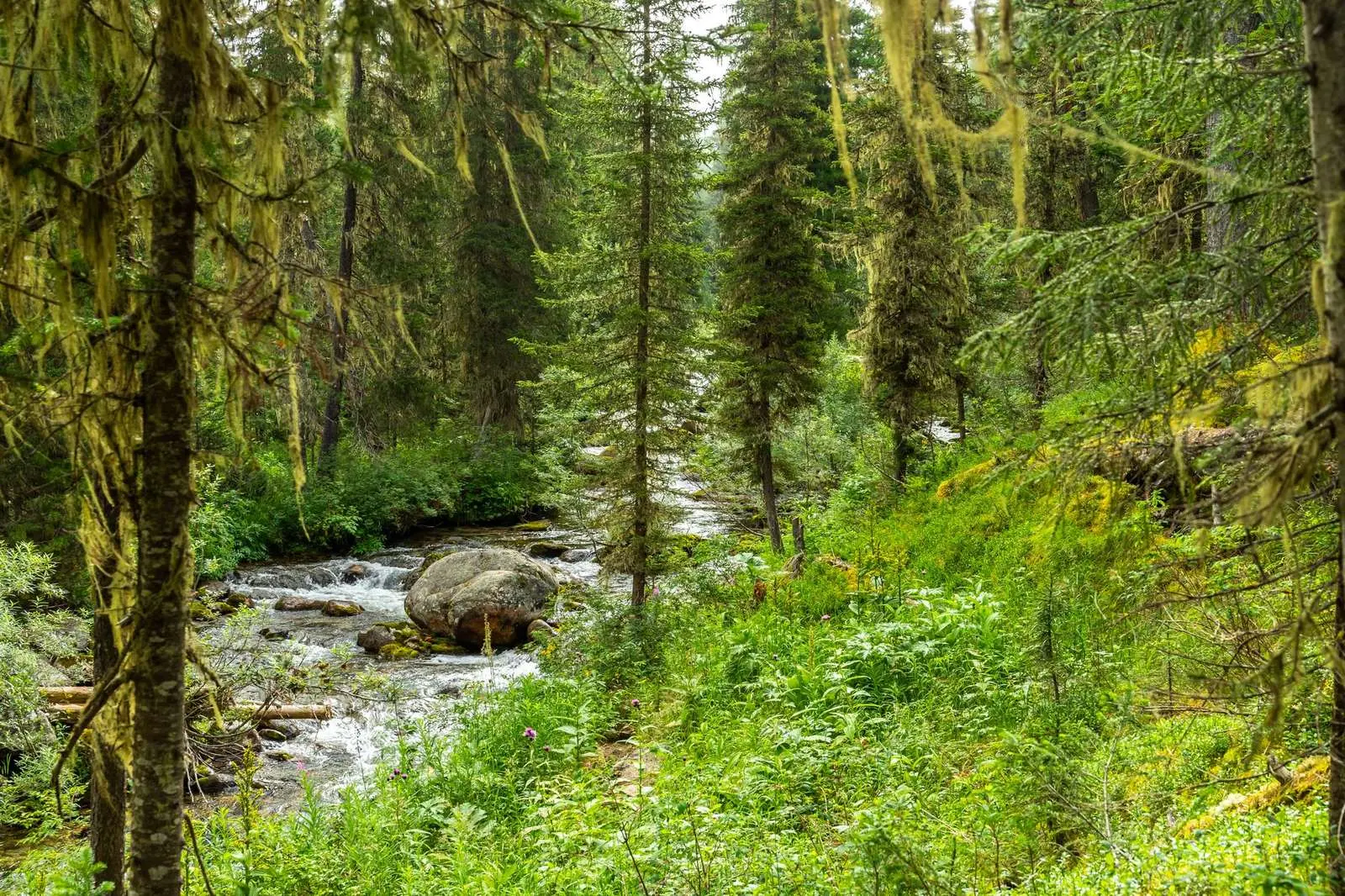
The Handbook of the Mammals of the World entry, hosted on Zenodo, describes the finer preferences. Sables are found in deciduous and coniferous forests, often in mountain regions and near streams.
The same entry lists what a good patch of forest looks like:
- Mature forest of large trees with a dense canopy.
- In China’s Daxinganling Mountains, late succession mixed forest with coarse woody debris and larch tree holes.
- Ridge tops with abundant logs, boles or roots, used for resting.
Open areas are the opposite of what sables want, according to that treatment, which says they avoid them.
Dens, home ranges and movement
A sable’s den is usually well hidden. Wikipedia says it lives in burrows near riverbanks and in the thickest parts of woods, often dug among tree roots for security.
The Zenodo treatment lists the range of rest sites:
- Holes among or under rocks.
- Hollow logs.
- Space under tree roots.
- Burrows that lead to a nest chamber lined with dry vegetation and fur.
Each sable defends a home territory of 4 to 30 square kilometers, according to One Earth. Food availability and local geography set the size, and in winter a hungry sable can travel up to 12 kilometers per day.
Food drives much of this roaming, and the full menu is laid out in the guide to what do sables eat. The Zenodo entry says the diet consists mostly of small mammals but also includes birds, reptiles, amphibians, fish, insects, fruits, honey, nuts and berries.
How the sable’s range has changed
The sable’s range used to be far larger. The Animal Diversity Web says the species once spanned the area from Scandinavia to northern China, while its present distribution does not extend as far west but still covers Siberia and reaches northern China.
Fur hunting was the main pressure. The same account says licensed hunting and fur farms were set up so wild populations could grow, and that these measures let the sable reestablish part of the wider range it once held in the taiga.
In Russia, people also helped. Wikipedia says the sable’s distribution there is largely the result of mass re-introductions involving 19,000 animals between 1940 and 1965. Its range now runs north to the tree line.
Subspecies, status and why habitat matters
Because sables look different from region to region, scientists disagree on how many subspecies exist. Wikipedia notes that Mammal Species of the World recognises seventeen, while other scholarly sources have identified anything from seven to thirty.
As of the 2009 Handbook of the Mammals of the World treatment on Zenodo, the sable was classified as Least Concern on the IUCN Red List and considered common through most of its distribution. The same treatment calls it rare in China, where it was once common.
One Earth’s profile calls the sable an indicator of taiga health. In its words, the animal signals changes in one of Earth’s largest forest systems, which matters for climate, biodiversity and human livelihoods, as the species profile explains.
Frequently asked questions
Do sables live on the ground or in trees?
Show answer
Mostly on the ground. The Animal Diversity Web calls the species mostly terrestrial, hunting and building dens on the forest floor, though Wikipedia adds that it climbs cliffs and trees well.
Do sables share their territory?
Show answer
Not much. The Zenodo treatment says they are solitary outside the breeding season, and in the Chinese study it cites, males had virtually no overlap with other males while females overlapped with males.
What do sables do in bad weather?
Show answer
They stay put. The Animal Diversity Web reports sables hiding in their dens for days during snow storms, or when people are hunting them.